Partner Evaluation
Assessing audience overlap without sharing private contact lists
Compare customer roles, tasks and buying stages using broad summaries while keeping contact data out of early partner assessment.

Section
Partner Evaluation
Compare customer roles, tasks and buying stages using broad summaries while keeping contact data out of early partner assessment.
Partner Evaluation
Map customer tasks and hand-offs to find co-marketing candidates, record the evidence for each and decide who merits an approach.
Partner Evaluation
Assess whether two B2B customer bases share a relevant problem and whether each partner brings a distinct contribution.
Partner Evaluation
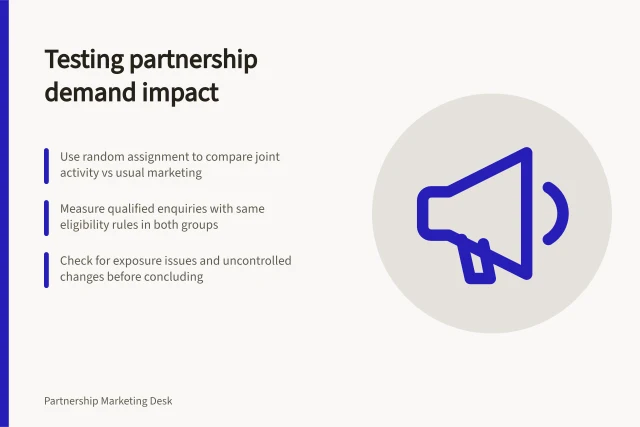
Assess whether a joint B2B marketing activity adds demand with a defined outcome, credible comparison and clear limits.
Partner Evaluation
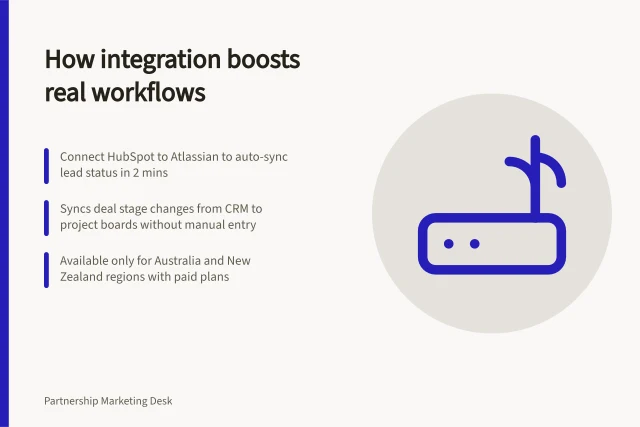
An integration description should show what a customer can do after connecting two products. “Seamless integration” says little. Replace it with a concrete flow …
Partner Evaluation
Find co-marketing candidates through customer needs, then assess audience fit, distinct contributions, capacity, claims and conflicts before committing.
Partner Evaluation
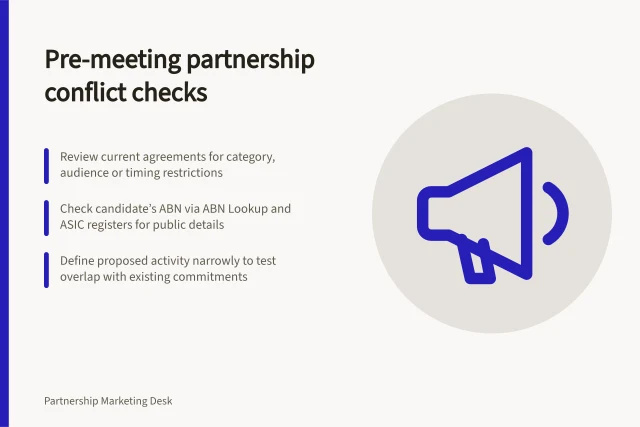
Check your commitments and a prospective partner’s public position, then separate confirmed restrictions from questions for the first meeting.
Partner Evaluation
Check whether an existing B2B alliance still solves a customer problem, and distinguish an unclear message from a missing joint benefit.
Partner Evaluation
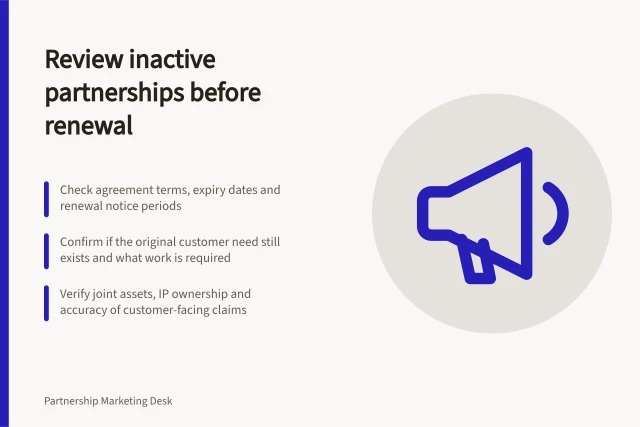
Diagnose why a partnership is quiet, check its agreement and live assets, then make a defined renewal decision.
Partner Evaluation
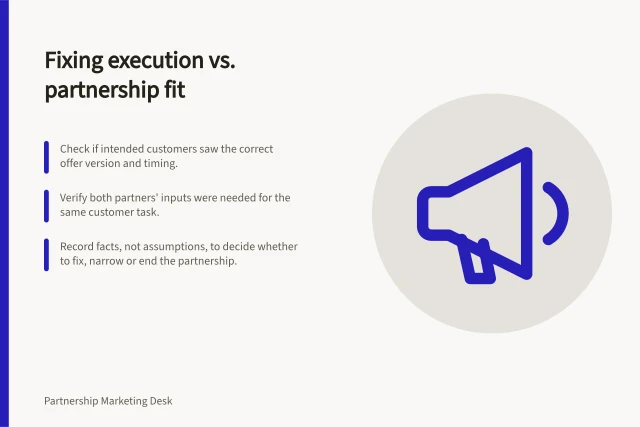
Diagnose whether a disappointing partner campaign reflects a delivery fault, a weak customer proposition or unresolved evidence.
Partner Evaluation
Build a B2B marketing partnership around a customer problem, complementary contributions, shared value and a small first activity.