Partner Enablement
Part of Joint webinars and educational events
Planning partner follow-up after a shared event
Plan event follow-up around promised resources, attendee questions, clear owners and the permissions that apply to each message.
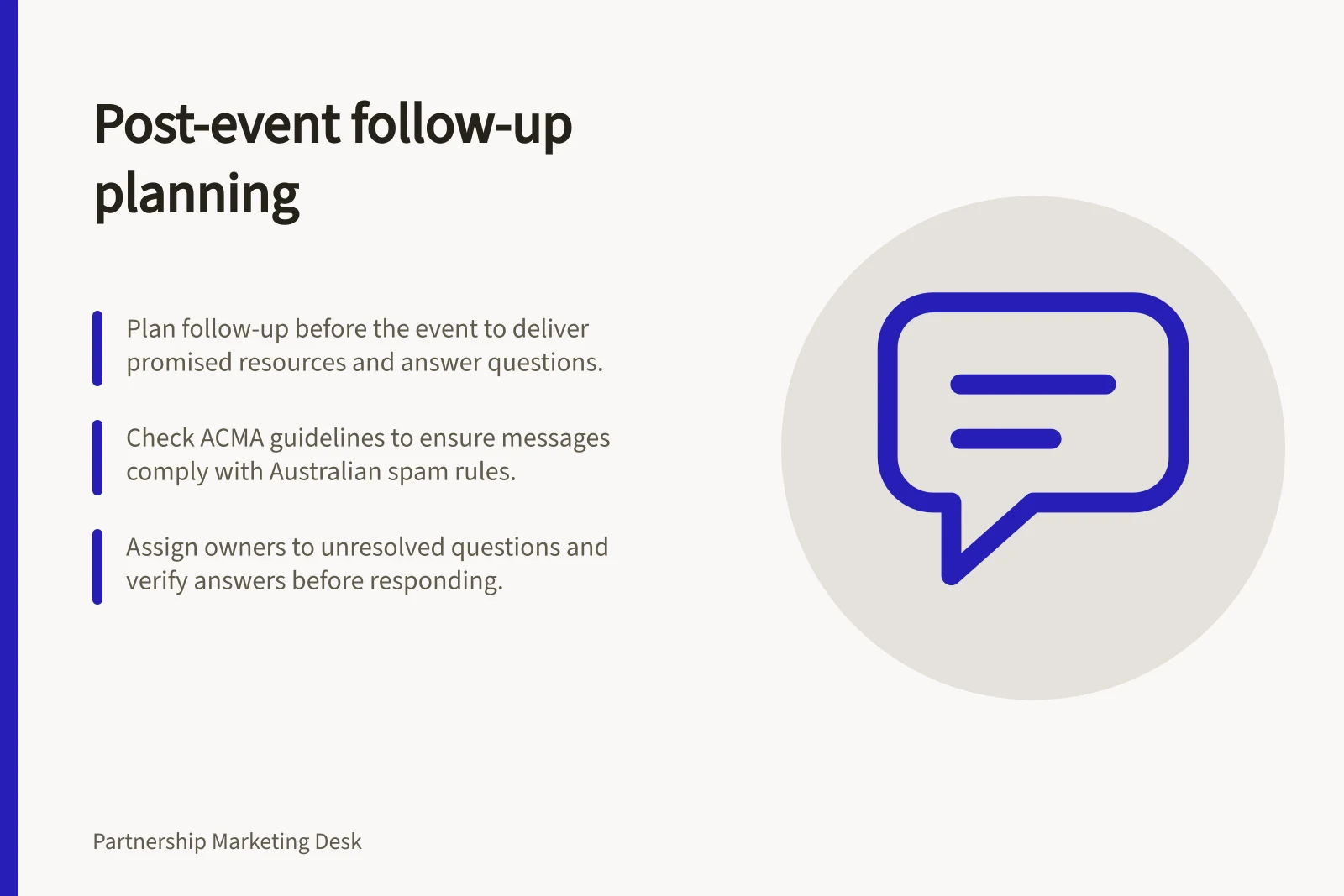
Plan follow-up before the event so attendees receive what was promised and their questions reach someone able to answer them. For each proposed message, decide its audience, sender, purpose and owner. A shared event does not make every attendee a prospect for both partners.
Start with the event’s promises
Read the registration page and confirmation message. List promised materials, recording access, response commitments and the organisation responsible for each. Fulfil those commitments accurately. If a recording is delayed or unavailable, explain what happened and give an update rather than sending a broken link.
Assess practical event messages separately from later promotions. A message’s content and circumstances affect which Australian electronic messaging rules apply. Check the relevant guidance, including the ACMA’s guidance on avoiding spam, for each message. Do not assume registration or attendance grants both partners marketing permission.
Compliance Essentials for Post-Event Messaging
- ACMA Spam GuidelinesFollow ACMA’s rules on avoiding unsolicited electronic messages.
- ACCC Misleading Claims RuleSupport all claims with evidence; false or misleading statements may lead to penalties.
- Privacy Principle 1 (APP 1)Only use personal information for the purpose it was collected unless consent is given.
Match the response to the attendee’s action
A registrant may need promised resources. A general teaching question may suit a shared answer that does not identify the person who asked it. A question about one partner’s offer belongs with someone qualified at that partner. A request to speak with both partners calls for a check of what the attendee requested and how their details may be shared.
These are response choices, not automatic permissions to transfer records. Where the Australian Privacy Principles apply, later use or disclosure of personal information must be assessed against the collection purpose and applicable rules. Passing one question to the relevant expert may require less information than circulating an attendee export.
When to Share Personal Information vs. Keep It Private
- Shared Answer (No Identification)Use when responding to general questions from multiple attendees. No personal details need to be shared.
- Partner-Specific ResponseSend questions about one partner’s product or service to that partner only. Avoid unnecessary disclosure.
- Joint Response RequestOnly share attendee details if both partners agree and the purpose aligns with the original collection purpose.
Give unresolved questions an owner
The moderator can record an uncertain question without improvising an answer. After the session, assign an owner who can verify it and set a response point. Share only the context that person needs through the agreed route. Tell the attendee if the answer cannot yet be confirmed.
Each partner should check its own product or service answer. The Australian Competition and Consumer Commission can require businesses to back up claims they make about their products or services, and it accepts reports about possible misleading or false claims. Put a material plan, setup or eligibility condition with the answer it qualifies. A request for an answer should not silently become an unrelated sales approach.
Review the follow-up
At an agreed review point, check whether promised resources were sent, open questions were resolved and replies matched the attendee’s request. Keep registrations, attendance, questions and enquiries as separate measures. A recording download shows interaction with that material; it does not establish an opportunity or sale.
Use repeated questions to improve the next session. If attendees misunderstood an offer condition, correct the event description or speaker explanation. Qualification and routing of a shared sales lead belong in a separate process.