Joint Campaigns
Part of Partner marketing operations
Maintaining a record of shared campaign commitments
Keep a dated record of what each campaign partner accepted, delivered or changed, with owners, due points and evidence of completion.
Keep a dated record of what each campaign partner accepted, delivered or changed. The agreement defines the original obligations; this operational log shows current execution and points back to the agreed terms when scope or authority matters.
Agreement and operational log: different jobs
- AgreementDefines the original obligations and agreed terms.
- Operational logShows current execution, changes and evidence, and points back to the agreed terms when scope or authority matters.
- Limit of the logExplains delivery; it does not by itself establish campaign value or settle a disputed contractual obligation.
Record acceptance and evidence
Record a commitment once an authorised person agrees a partner will supply an input, produce an asset, review a version or distribute approved material. Describe a verifiable result: “promote the guide” is vague, while “schedule the approved guide email during the agreed launch window” gives teams a clearer delivery question. Identify the audience without copying recipient lists into the log.
Field / Question it answers
- Commitment
- What output or decision was accepted?
- Owner
- Which organisation and role will deliver it?
- Acceptance
- Who confirmed it, and when?
- Due point
- When is the next reviewable result expected?
- Evidence
- What file, decision or release record shows delivery?
- State
- Is it proposed, accepted, in progress, delivered or changed?
A proposed extra post stays a proposal until someone with the relevant authority accepts it. Delivery and permission to publish are separate states. A draft may arrive on time while claims or the complete customer-facing version still need review.
Proposal, acceptance, delivery and publication are separate states
- ProposedAn extra post remains a proposal until someone with the relevant authority accepts it.
- AcceptedThe commitment is agreed and recorded, but delivery still has to occur.
- DeliveredThe output has arrived, but claims or the complete customer-facing version may still need review.
- PublishedPermission to publish is a separate state from delivery.
Commitment record fields
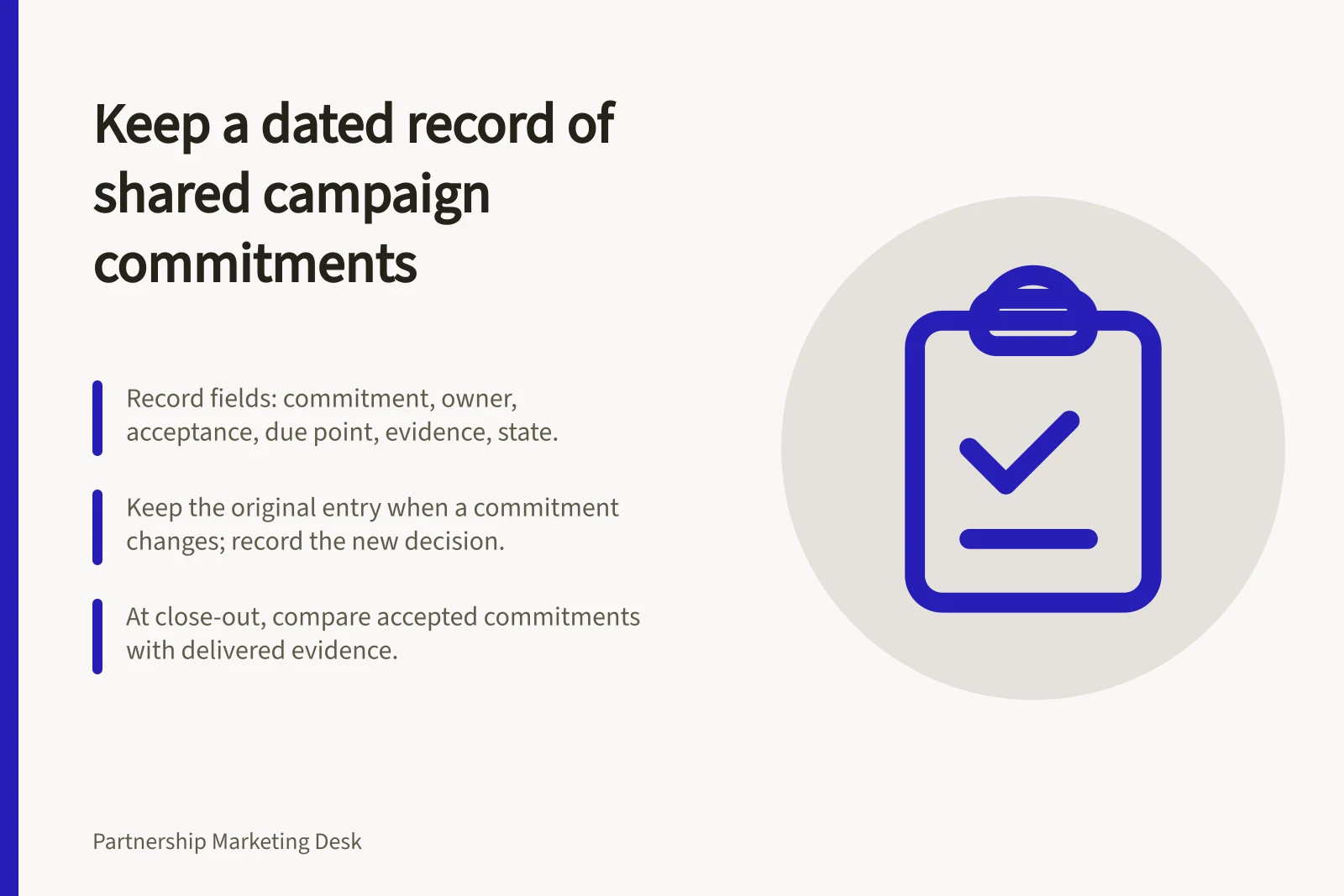
- Commitmentwhat output or decision was accepted?
- Ownerwhich organisation and role will deliver it?
- Acceptancewho confirmed it, and when?
- Due pointwhen is the next reviewable result expected?
- Evidencewhat file, decision or release record shows delivery?
- Stateproposed, accepted, in progress, delivered or changed?
Preserve changes
Keep the original entry when a commitment changes. Record the new decision, who agreed it, when it takes effect and which assets or dates it affects. If a full interview becomes a shorter case example, record whether the substitute meets the agreed output and who accepted the change.
A moved due date may affect claim review, design and release. Notify the owners of those downstream steps. If two people recall different terms, compare the dated acceptance and later changes. Mark the disputed point unresolved until authorised people settle it.
Recording a commitment change
- Keep the original entryDo not overwrite the earlier commitment.
- Record the new decisionCapture what changed and who agreed it.
- Note the effective dateState when the change takes effect.
- Identify affected assets and datesList the assets or dates the change touches.
- Check the substitute outputIf a full interview becomes a shorter case example, record whether it still meets the agreed output.
- Confirm acceptanceRecord who accepted the change.
- Notify downstream ownersTell claim review, design and release owners if a moved due date affects them.
Review at decision points
Before a review meeting, identify commitments due soon, waiting on another partner or lacking acceptance. Ask each owner for delivered evidence, a revised forecast or a blocker requiring a decision. After the meeting, update the record and tell affected owners what changed.
At close-out, compare accepted commitments with delivered evidence. Leave cancelled and partly delivered work visible with its agreed treatment. The log explains delivery; it does not by itself establish campaign value or settle a disputed contractual obligation.
Review and close-out cycle for shared commitments
- Before a review meetingIdentify commitments due soon, waiting on another partner or lacking acceptance.
- Owner check-inAsk each owner for delivered evidence, a revised forecast or a blocker requiring a decision.
- After the meetingUpdate the record and tell affected owners what changed.
- At close-outCompare accepted commitments with delivered evidence.
- Leave cancelled and partly delivered work visibleInclude its agreed treatment.