Joint Campaigns
Part of Co-authored research and content
Keeping partner contributions visible in a joint report
Readers should be able to tell who asked the question, who supplied data, who analysed it and who paid for the work.
Readers should be able to tell who asked the question, who supplied the data, who analysed it and who paid for the work. A row of logos does not explain those roles. Clear attribution protects the reader's interpretation and gives each partner appropriate credit.
Describe roles near the work
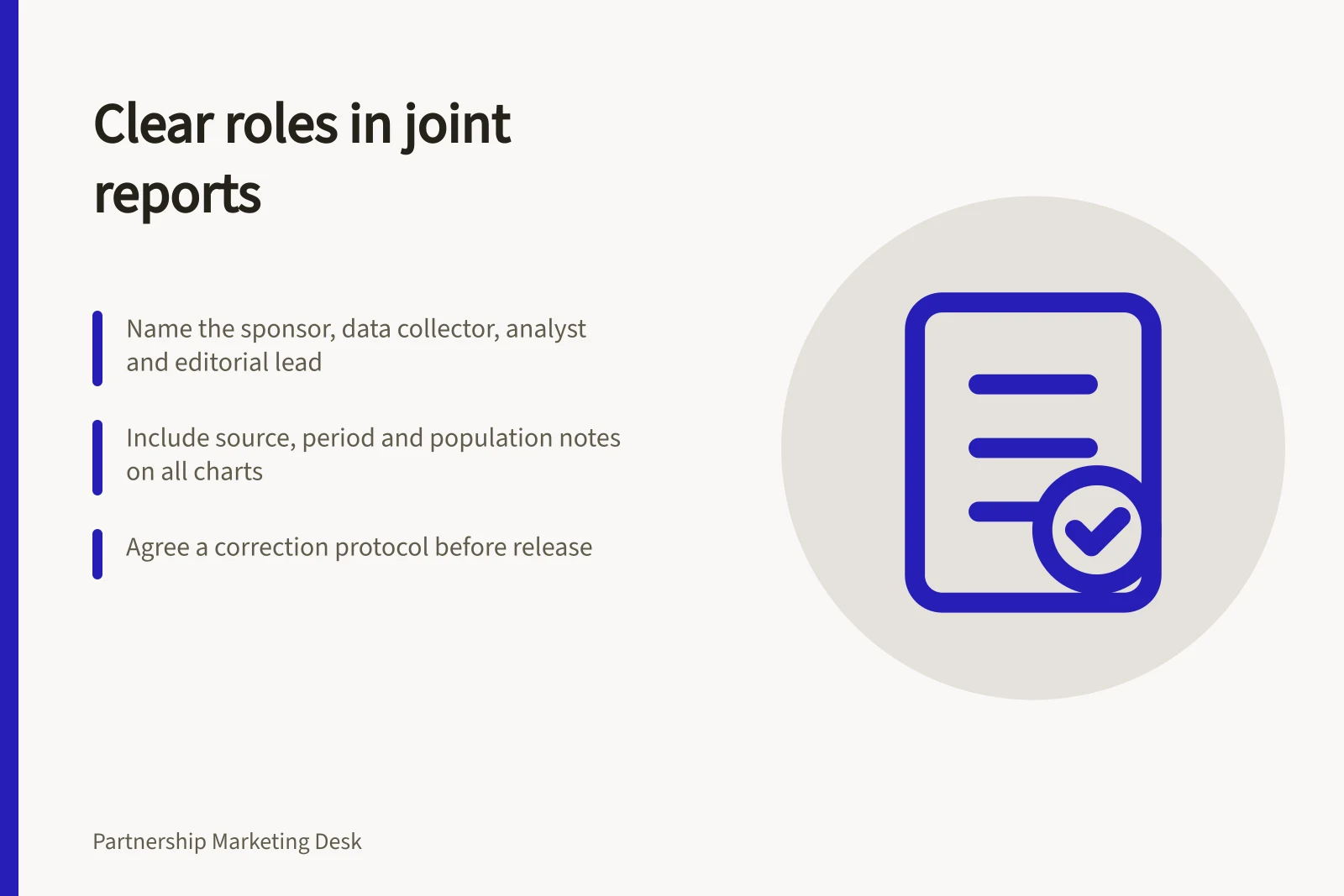
Place a short contribution statement near the introduction and a fuller methods note near the results. Name the sponsor, fieldwork or data collector, analyst and editorial lead. If one partner provided access to customers but did not verify the analysis, say so. If a partner reviewed the draft but could not veto findings, explain that distinction where relevant.
Name the parties involved and state what each did, including any limits on their role. Avoid claiming an independent study when a sponsor shaped the question or funded collection.
Benefits and Risks of Partner Contributions in Joint Reports
- ProsClear role attribution builds trust with readers; ensures transparency about who funded, collected, or analysed data; supports ethical reporting standards.
- ConsOver-reliance on partner input may compromise independence; unclear roles can mislead readers about objectivity; commercial interests may influence interpretation without disclosure.
Steps to Ensure Transparency in Joint Reporting
- Define Roles EarlyAgree on responsibilities—sponsor, data collector, analyst, editor—before work begins.
- Document ContributionsRecord what each partner contributed, including access to customers or review rights.
- Draft Attributions Near ContentPlace contribution statements near the introduction and methods section.
- Implement Correction ProtocolAgree on how changes are tracked and communicated across both parties.
Make each visual accountable
Add the source, period, population and calculation note to charts. For quotes or case examples, record consent and context. Mark partner commentary as interpretation, not as a measured result. A finding can be useful while its commercial implications remain debatable.
Agree a correction protocol before release. If one partner later changes a number on its site, the other version should not remain quietly stale. A shared version number and dated correction note show readers what changed without hiding the original responsibility.
Key Elements for Transparent Attribution in Joint Reports
- Required Attribution Elements
- Sponsor, data collector, analyst, editorial lead, funding source, consent context
- Visual Accountability Requirements
- Source, period, population, calculation note, correction protocol, version number